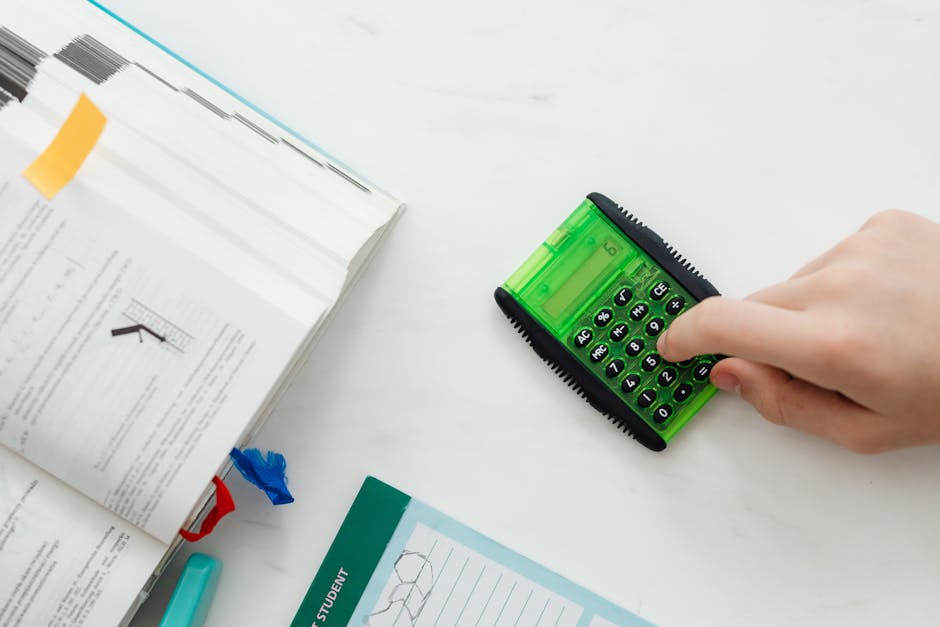
A savings goal calculator tells you how much to put aside each month to hit your target. This isn’t guesswork—it’s a tool that shows the exact amount you need to save over a set period. The article explains what that number means, where the figures come from, and how to use it in real life without getting it wrong.
What the savings number actually means
A savings goal is the total amount you want to save by a certain date. The monthly amount is the sum you must set aside to reach it, assuming you start from zero and your savings grow at a steady rate. It turns a vague idea into a precise figure you can work with. People use it for holidays, house deposits, or emergencies, but it works for anything with a clear cost.
The maths behind it comes from compound interest. The monthly amount is the future value divided by the number of months, adjusted for your expected growth rate. Banks and building societies use the same method when they show how much their ISA or account will be worth. You don’t need to be a mathematician—just enter your target, the timeframe, and the growth rate.
Say you want £5,000 in 24 months with 3% annual growth. First, divide 3% by 12 to get 0.25% monthly growth. Then use the future-value formula to find the monthly deposit: £5,000 / ((1.0025^24 - 1) / 0.0025) = about £202 a month. After 24 months of £202 deposits growing at 0.25% each month, you’ll have £5,000.
The calculation changes if you already have savings, if the growth rate isn’t steady, or if you add lump sums along the way. Some calculators ignore inflation or tax, which can make the result look better than it really is. Always check whether the tool assumes you start from zero or includes money you’ve already saved.
How to work it out on your own
- Enter your savings goal.
- Enter how long you have to reach it.
- Enter the interest rate your savings earn.
- See the monthly amount needed.
PMT = FV × (r/12) ÷ ((1 + r/12)^(months) − 1)Savings Accounts Comparison: Interest Rates vs. Fees (2024)
| Feature | High-Yield Savings | Traditional Savings | Money Market |
|---|---|---|---|
| Annual Percentage Yield (APY) | 4.50% | 0.01% | 3.75% |
| Monthly Fee | $0 | $5 (waived with $300 min) | $0 |
| Minimum Balance | $0 | $100 | $1,000 |
| Access to Funds | Instant transfers | ATM & branch | Checks & cards |
Why guessing doesn’t cut it
Small, inconsistent shortfalls add up fast. Someone aiming for £3,000 in a year but only saving £200 a month instead of £240 will be £480 short. That shortfall means cancelling the trip or borrowing, neither of which feels good when it’s avoidable.
Once you know the exact monthly figure, budgeting becomes much easier. You can see if you need to cut costs, earn more, or extend the timeline. It turns a wish into a plan you can stand by—whether it’s for yourself or for anyone who might otherwise talk you into spending.
Real cases with the numbers laid bare
Saving for a £2,000 holiday in 18 months
Target £2,000, 18 months, 2% annual growth. Monthly growth is 2% / 12 = 0.1667%. Use the formula: £2,000 / ((1.001667^18 - 1) / 0.001667) = £107.83. Round up to £108 a month. After 18 months of £108 deposits with 0.1667% growth each month, you’ll have just over £2,000.
Odd target with mixed units
Target 1,250 US dollars in 10 months with 1.5% annual growth. First convert to pounds roughly at 1.25 USD/GBP, so £1,000. Monthly growth is 1.5% / 12 = 0.125%. Formula: £1,000 / ((1.00125^10 - 1) / 0.00125) = £98.64. Round to £99 a month. If you forget to convert currencies, you’d think you need £125 a month, which is nearly 25% too much.
Traps that cost real money
| Common mistake | What to do instead |
|---|---|
| Using the annual growth rate as the monthly rate | Divide the annual rate by 12 to get the monthly rate before plugging it into the formula. Using 3% instead of 0.25% makes the monthly deposit look far smaller than it really is. |
| Ignoring existing savings | Subtract what you already have from your target before running the numbers. Otherwise, you’ll over-save and tie up cash that’s already sitting in the account. |
| Mixing up months and years in the timeline | Double-check the number of months, not years. A 5-year goal is 60 months, not 5. A simple slip here can make the monthly amount off by a factor of ten. |
Use our free savings goal calculator
| Tool | What it does |
|---|---|
| Savings Goal Calculator | Find out how much to set aside each month to hit your savings target. |
| Net Worth Calculator | Total your assets, subtract your debts, and see where you stand. |
| Retirement Savings Calculator | Project how much your savings could grow by the time you retire. |
Try the Savings Goal Calculator
Skip the manual maths — enter your numbers and get the answer instantly.
Open the Savings Goal Calculator →A quick sanity check before you commit
Small differences in interest rate, term or timing can add up to large sums over the years. Before committing to any financial decision, run a few different scenarios so you can see the full picture and choose with confidence.
The three things to remember
- Always use the monthly growth rate, not the annual one.
- Subtract any savings you already have from the target first.
- Round the monthly figure up, not down, to give yourself a buffer.
Perguntas frequentes
What if my savings earn no interest?
Set the rate to 0. The calculator detects this and simply divides your goal by the number of months, which is the correct answer when nothing compounds.
Does it include money I have already saved?
No. It assumes you are starting from zero. If you already have a balance, work out what that balance alone will grow to over the same period, subtract it from your goal, and run the calculator on the remainder.
Are deposits assumed at the start or end of each month?
At the end — this is an ordinary annuity. Depositing at the start of each month gives every payment one extra month of growth, so you would need slightly less than the figure shown.
Does it account for inflation?
No. The target is in today’s money and the result is a nominal figure. If your goal is years away, the real purchasing power of that target will be lower than it is now, so consider whether the target itself should be higher.
What rate should I enter?
Whatever your account or investment actually pays, not a default we pick for you. Bear in mind that variable savings rates change, and if the money is invested rather than saved, the return is not fixed at all — the calculator assumes a single constant rate throughout.